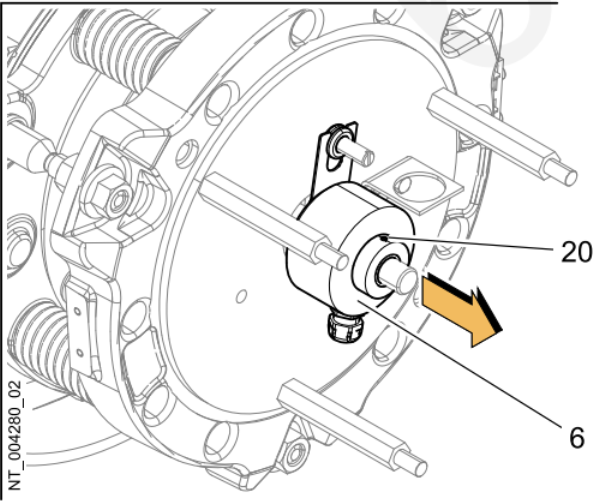
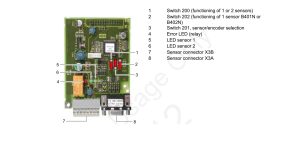
Slewing Motor Encoder Failure (internal short)

If the motor encoder is internally shorted, the drive may not operate in partial open loop as it tries to protect itself.  If this is the case, unplug the 2 connectors from the slew drive and reprogram parameter 90.46 to Force Open Loop.

The drive will also need to be told not to look for the Encoder.

  • Parameter 75.12
  • Switch from 2 to 0
  • Save

In this specific case, operator experienced a separate fault showing “Transition 4” .  Here is the link to that fault.

https://service.rockymtncranes.com/2024/01/12/transition-4/


Setting up MR329 without 3 dead turns

When teaching in the MR329 it isn’t required to set the 3dead turn parameter if the block will reach the ground before running out of rope on the drum.
If you previously set the 3 dead turn and need to get rid of the saved information on CSS, unpair the hook height encoder, pair it. Turn off CCS and turn it back on. Teach the zero height, and the upper height and then escape out of the teach in menu. A prompt will warn you on startup that 3 dead turns has not been set.

This is important because if you have a crane that reaches below the base of the crane the 3 dead turn function may preclude you from going low enough.


You can get around this if you want by pulling out rope onto the ground and setting the 3 dead turns but it may screw you on the next jobsite.  

Windshield washer check valves

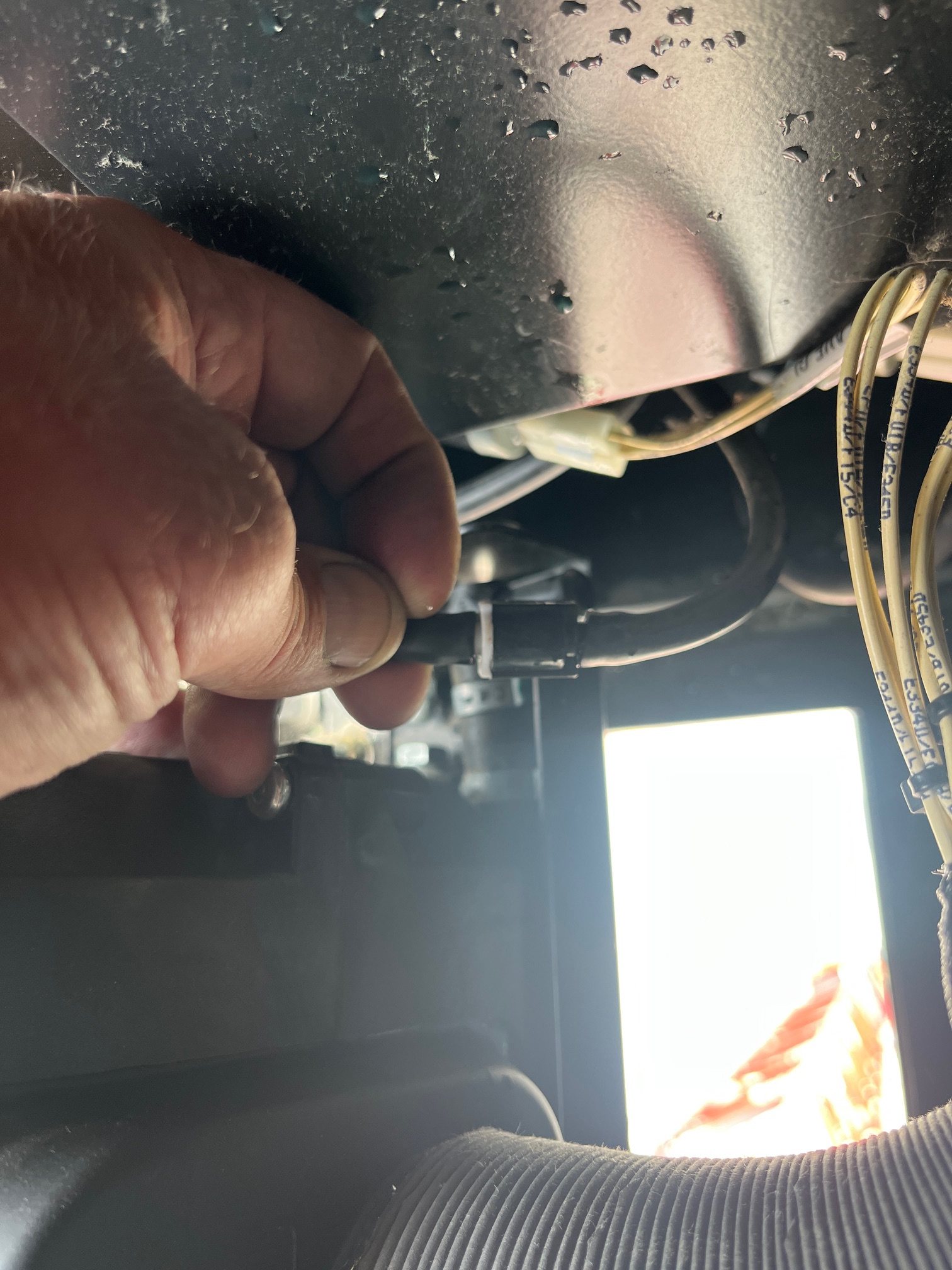
While filling the washer bottle, all the fluid would leak out.

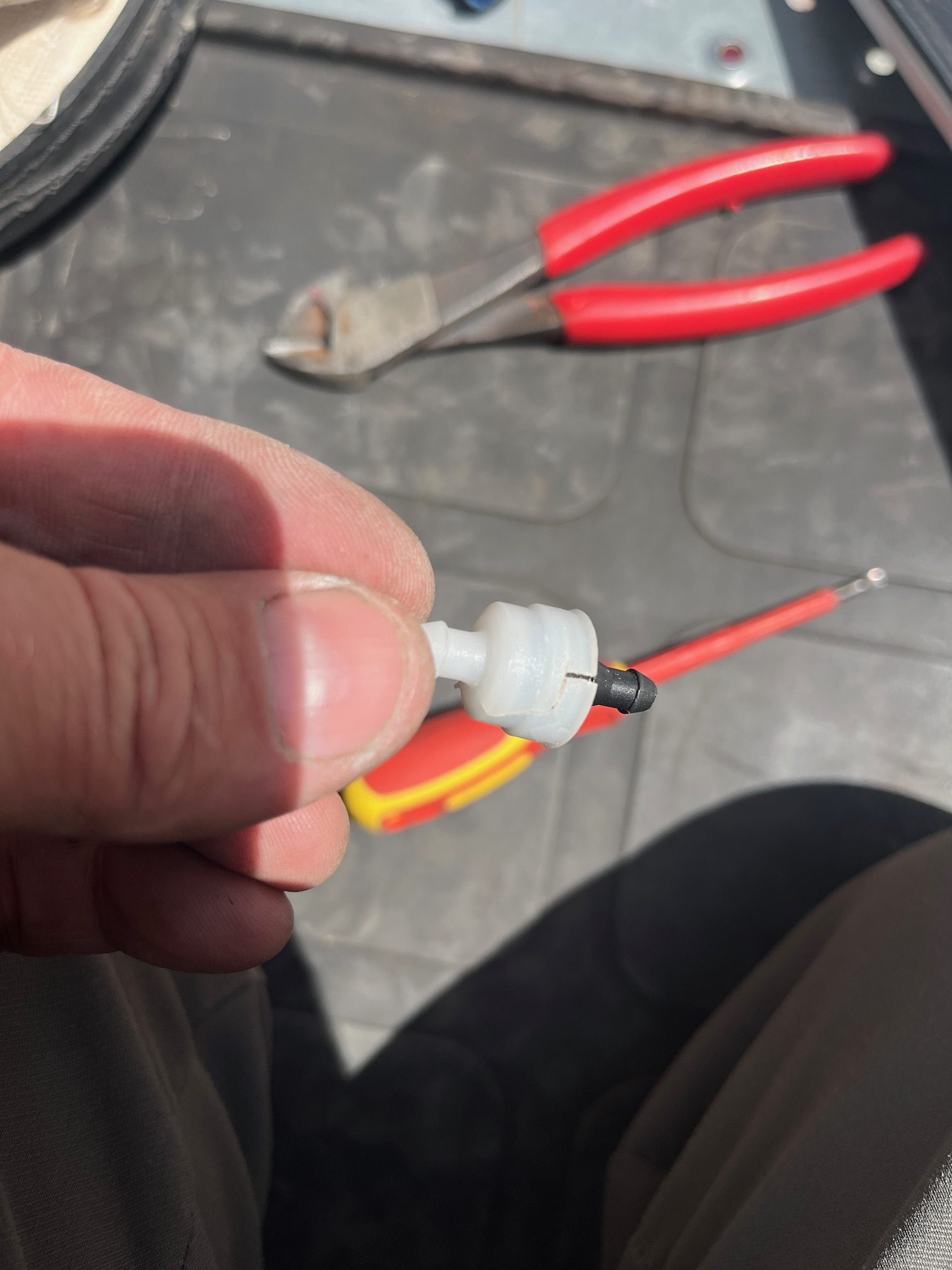
On the output side of each washer pump is a check valve. 

to access the valves the A/C unit must be removed.
found that the check valves were broken and cracked, presumably from freezing. Replaced the valves ( toyota part # 85321-26020) and washer bottle stays filled.

GR Plug – MDT 389

The GR plug is for the auto greaser option. The auto greaser does not have GR marked on the plug. If the GR plug is not plugged in the slew ring will not be automatically lubricated.


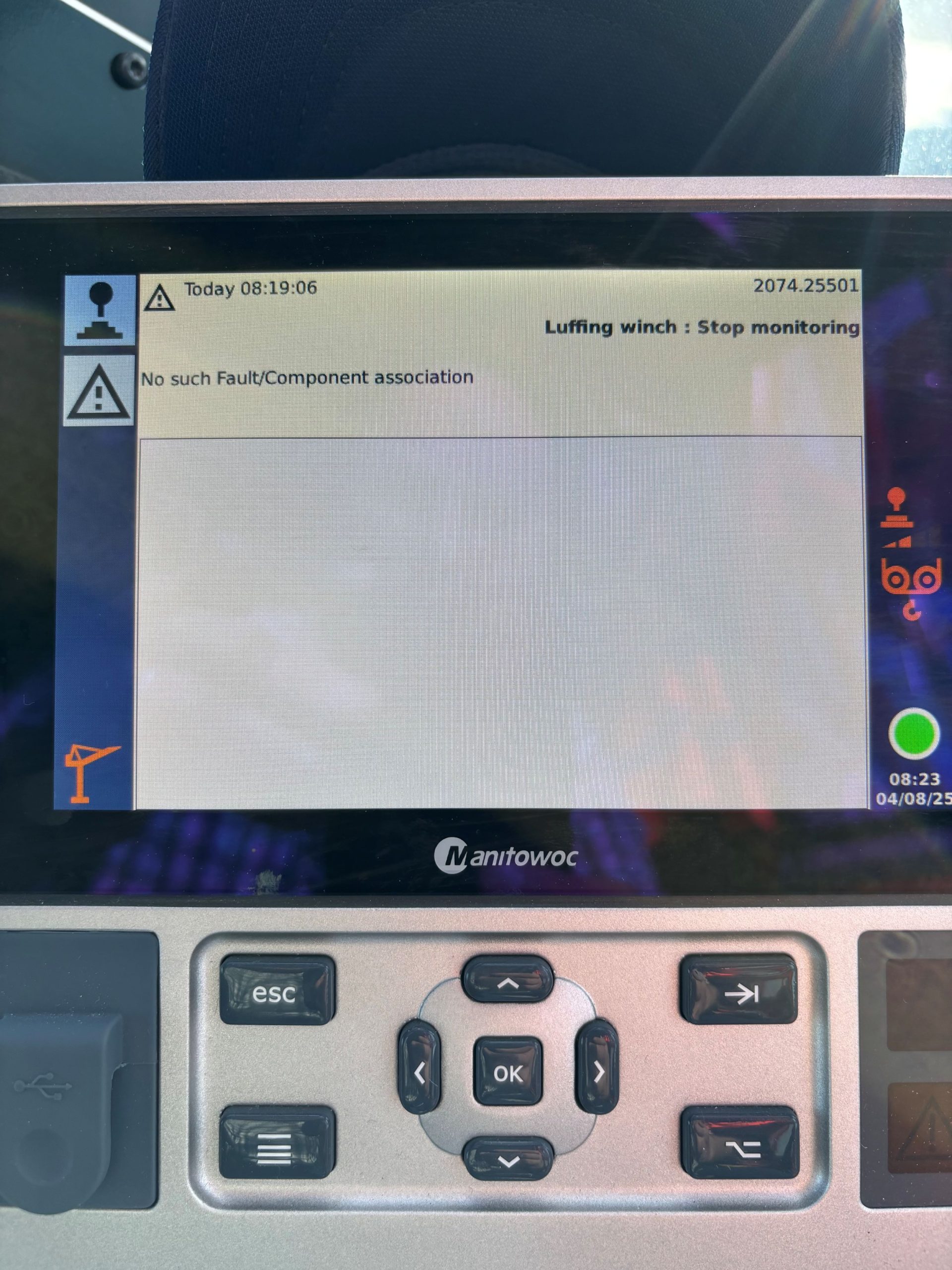
Luffing Winch Stop Monitoring Fault code.

While operating the MR 329 The operator lost boom down function. Fault Code 2074.25501 was listed in messages.  The Potain Fault code app had no definition of the fault code. I instructed the operator to turn off the crane and restart it. When the crane was running again the code was cleared and the crane regained boom function.

Attached is the Code and the code description from Potain.

25501 Stop monitoring definition

Crane Topsite Shunt Code

Shunt code for Topsite shunt when activated is 8528
This code can be any code you choose, in an attempt to standardize the shunt code please make it 8528 at the time of setup.

Currently the shunt code for the MDT389 SN: 627012 is 1025

MDT 219 loses functions – bad encoders

 Operator stated crane lost all functions. Found the LMI, and drives were all on with no codes. Looked in the CAN network of the LMI and saw the slew encoder wasn’t pairing,
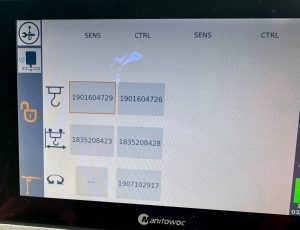
this was confirmed by a blinking green and red light on the encoders.

Video of lights blinking

There was evidence of corrosion on the encoders,
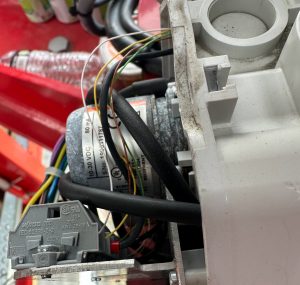
and it was decided to replace the encoder assembly. Once it was replaced, we cleared the old encoder addresses and paired the new encoder and the crane regained functionality.
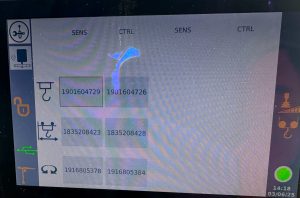
Moments later the crane stopped working again. The operator said all of his LMI information wasn’t present (hook position, weight on hook, and trolley location)
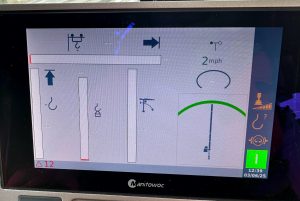
the drives were all operational but there were multiple faults codes being thrown. CAN Saturation, CAN Sense codes, and various codes relating to trolley, hoist and load.
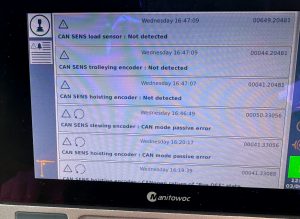
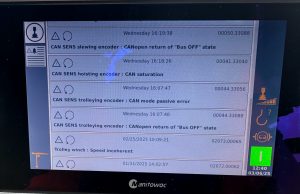
The CCL plug was disconnected to test if the load pin, hoist or trolley were faulting the can network. When the crane was restarted the fault codes stopped happening, and the slew function was regained. We also put the crane into fitting mode, this allowed us to test functions without the use of the CAN network. We also saw that the encoders for the hoist, Tolley and load pin were being seen then shutting down then being seen on the CAN open network screen of the LMI.
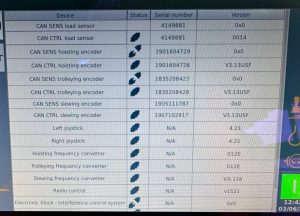
It was decided to remove the CAN H and CAN L from the CAN Sense connection one at a time from each encoder by connecting the CAN H to CAN H and  CAN L to CAN L leads that come in and leave the encoder (taking the tested encoder out of the circuit) until functionality was regained and a loss of an encoder was recognized on the CAN Open Network.
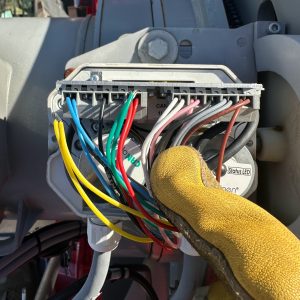
The hoist encoder was the first tested, and when we removed the hoist encoder from the network, the CAN network connected to the trolley and load pin and showed the hoist was offline, the LMI regained load information, and trolley position, and the hoist encoder wasn’t being recognized.
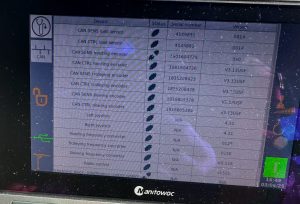
The Hoist encoder was replaced, the new encoder was paired,
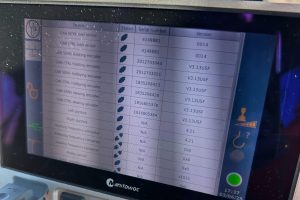
and the hoist min height was re-taught. The crane regained functions.  

Popping from tower head area MDT389

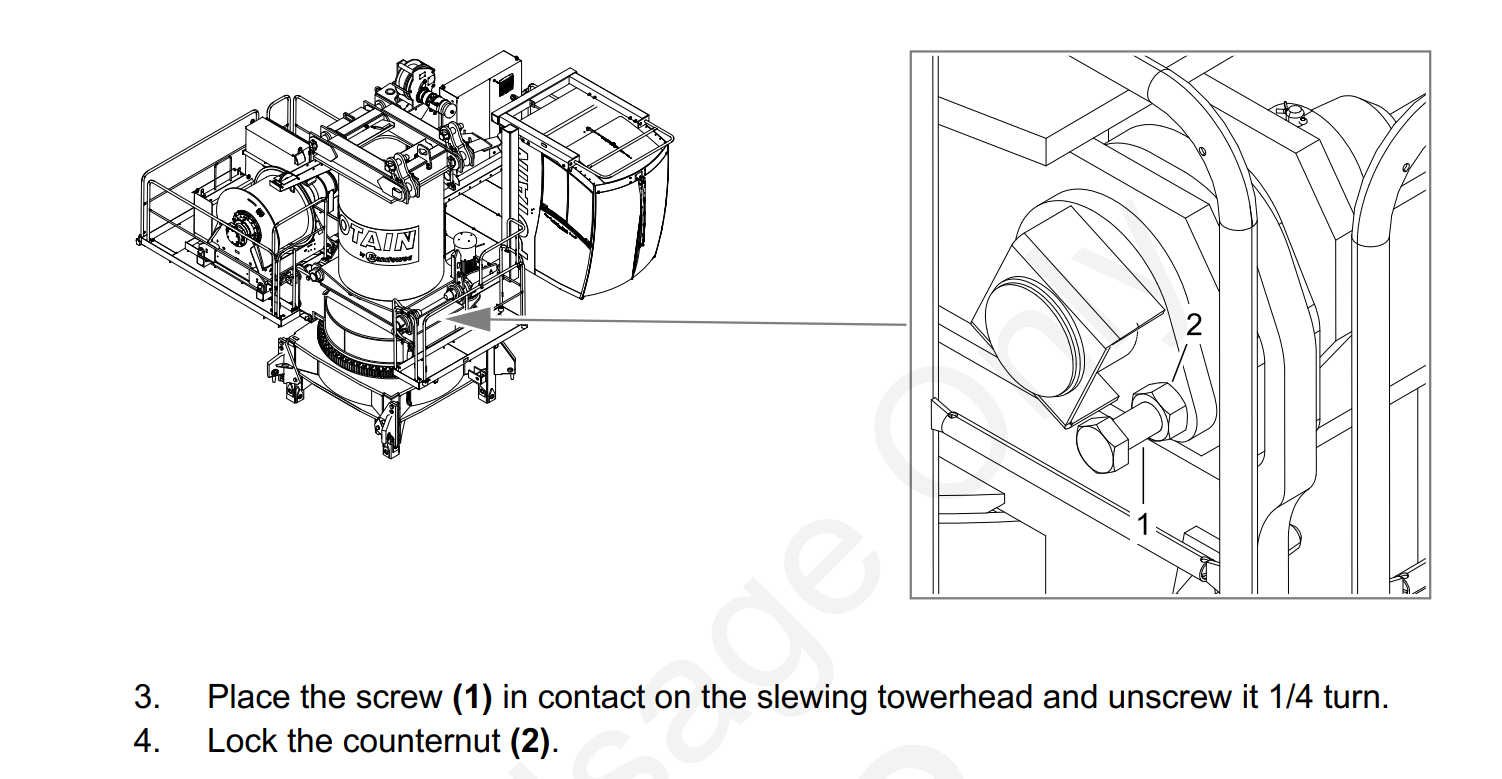
There are 4 pins that connect the tower head to the turntable. Near these pins there are 4 bolts that apply torsional pressure against the pins. The Operator Manual says to tighten the bolts then back them off 1/4 turn and set the jam nut. Blake Smith from Potain recommends these bolt be tightened and not backed off. Throughout operation of the crane occasionally re-tighten these bolts. The pin connections will pop as has they “seat in” during operation and will eventually quiet. This is a common issue with new 389 cranes.

Directions from Operator Manual

Hoist motor operates slow MDT 389 (Degraded Mode)

Operator gave hoist up command, Brake release felt sudden and hard, Followed by a very slow hoisting up or down. Some cases the crane would kick the operator out shortly after the hoist function was given. When the crane faulted E.65 was displayed on the KEB hoist drive.

New Encoder was ordered

Hoist drive was placed in to Degraded Mode

Replaced hoist Encoder,

Took hoist drive out of degraded mode and normal operation resumed.